Franco-Peruvian School
Franco-Peruvian School
Un proyecto educativo de Barclay & Crousse en Lima, Perú, concebido para reconstruir un colegio en funcionamiento y repensar el aprendizaje desde la arquitectura.

The need to replace the original infrastructure, built in the 1950s and already obsolete in terms of seismic resistance, led to the organization of a two-phase international architecture competition.

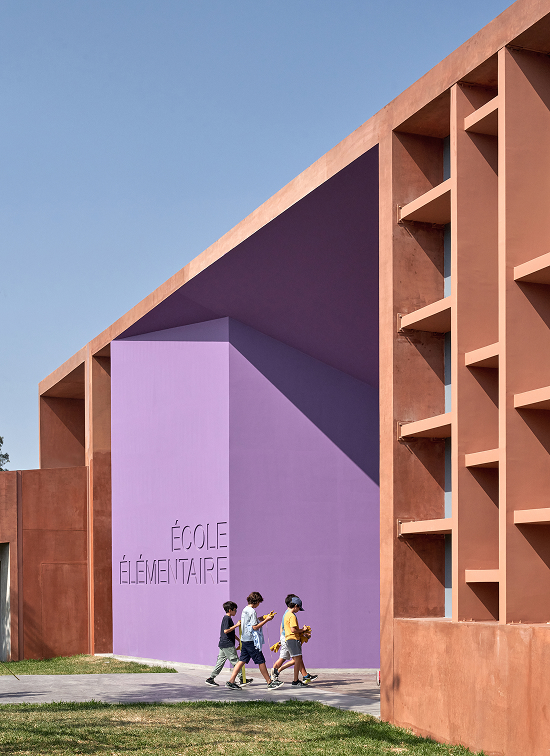
The challenge was to completely rebuild the school while it remained operational, without interrupting classes. To achieve this, the project included a phased construction and demolition plan, adapted to both French and Peruvian regulations.

The proposal is structured around three pedagogical principles, with architecture as a facilitating framework: stimulating the playful component of learning; enabling methodologies that recognize different forms of intelligence; and promoting experiences outside the classroom to strengthen social intelligence and the spontaneous generation of bonds.
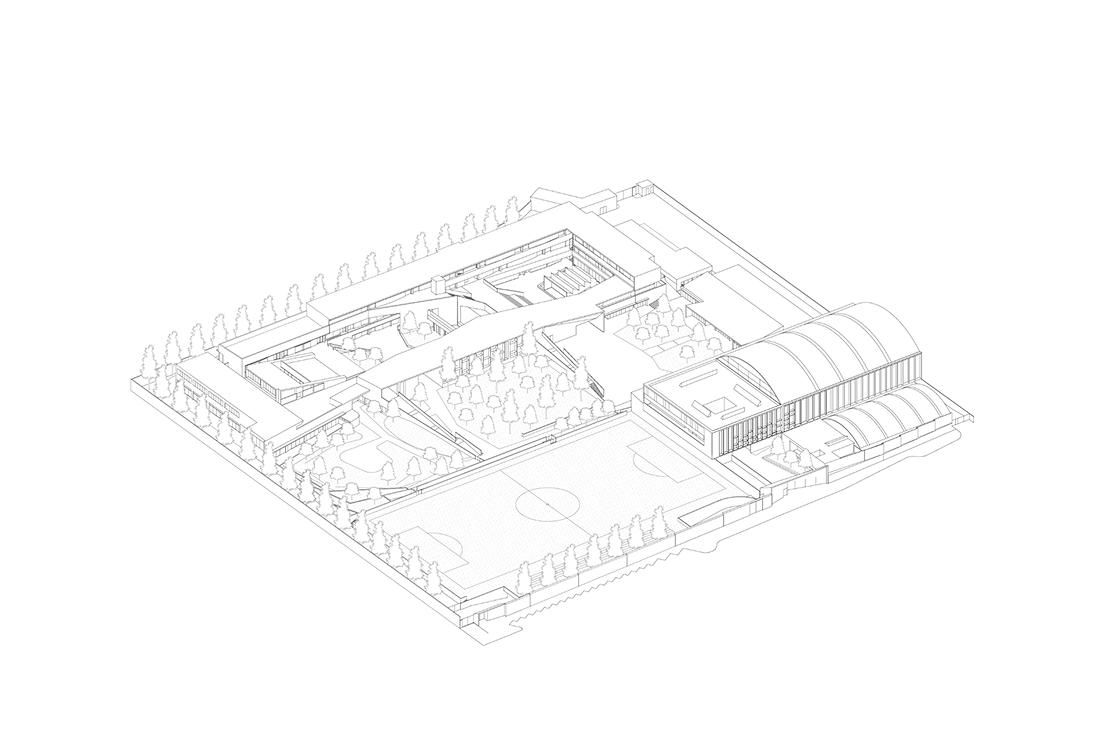
The architectural design responds to the site's conditions, organizing the complex into three functional zones. The first, adjacent to the Pan-American Highway, houses the administrative and sports areas, creating a sound barrier that protects the school from heavy traffic. The academic zone is located at the opposite end, on the former sports fields, which avoided major demolitions and allowed for the continuity of activities. Between the two zones lies an ecological zone, conceived as an active garden focused on the environment. There, students and teachers carry out urban agriculture, recycling, and flora and fauna observation and research activities.


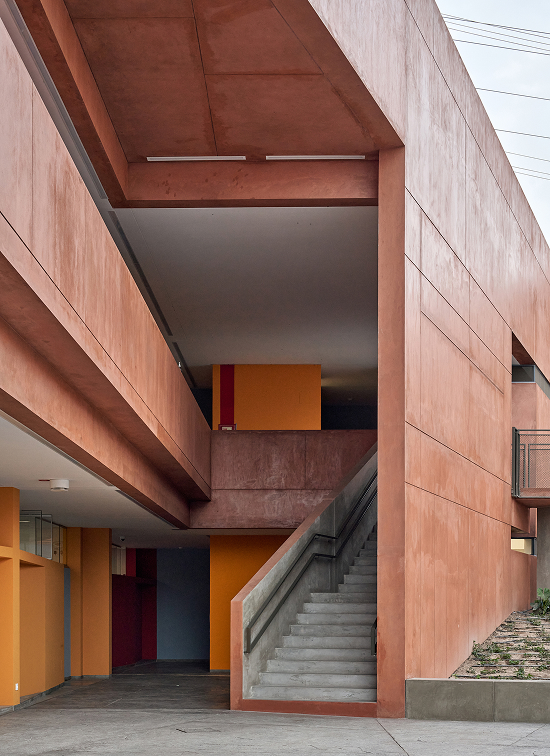
The completed academic section is housed in a single building that combines preschool, primary, and secondary levels. Each level is accessed from the central garden via pathways that branch off along ramps winding through the trees, and a color-coded threshold distinguishes them. The different levels are arranged around open courtyards designed according to the students' age groups, creating ample space for informal learning.
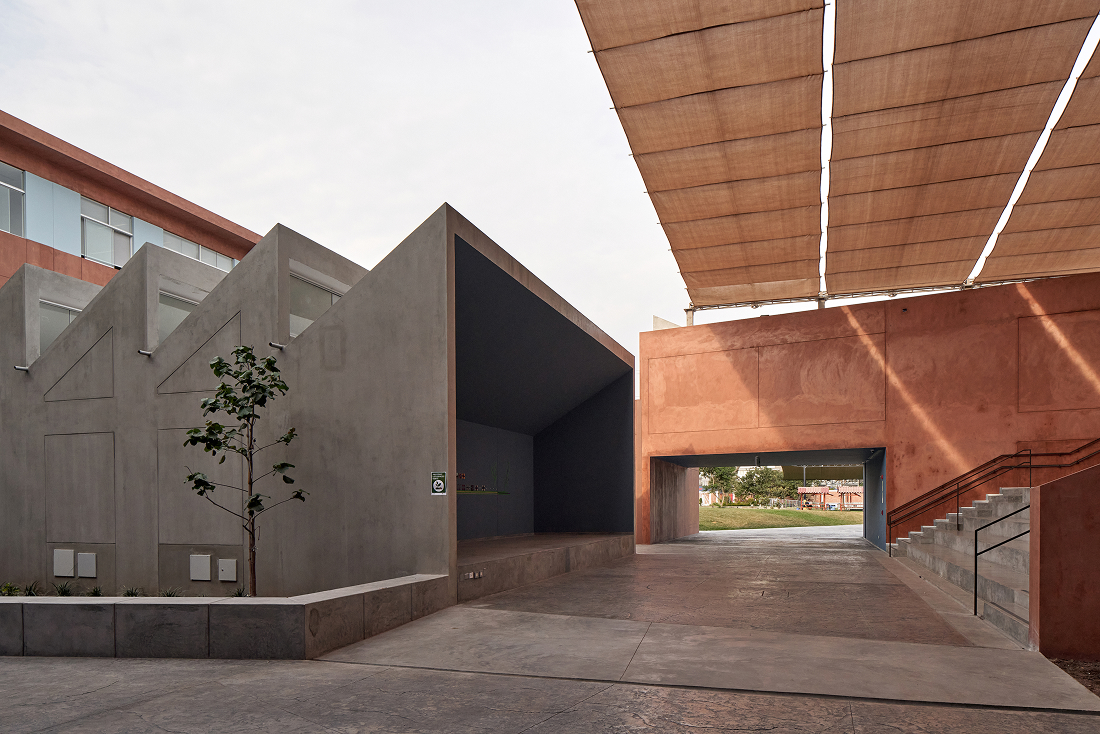
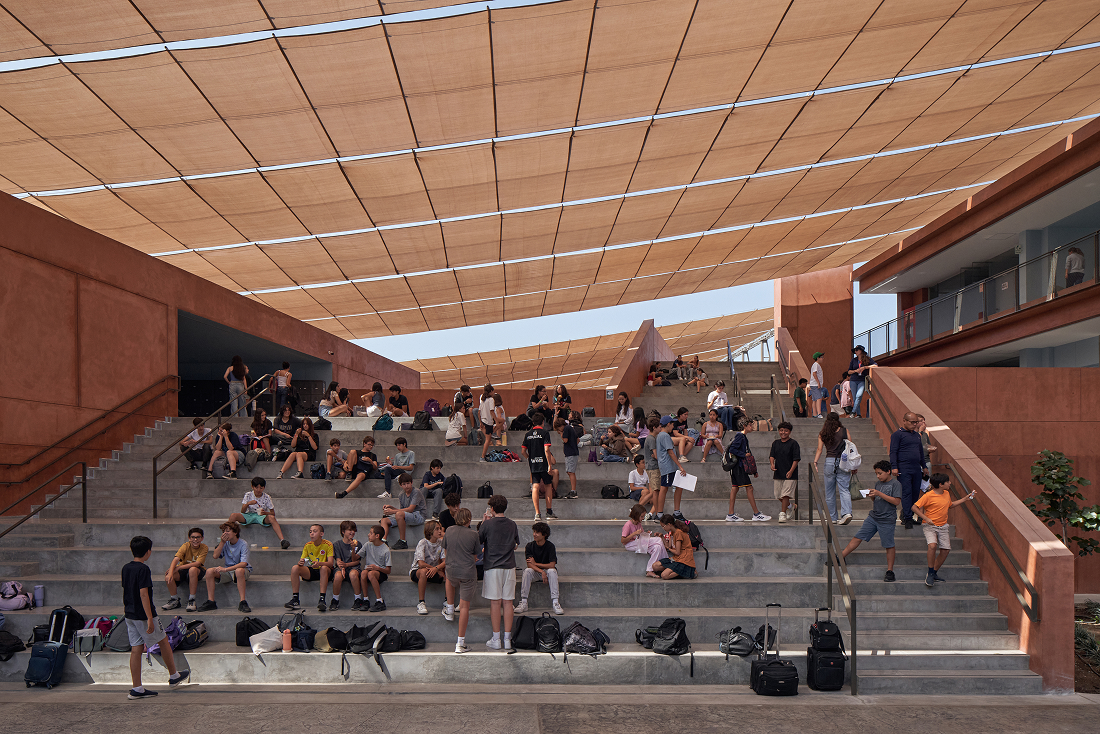
Although functionally autonomous, these units remain visually connected. Regulatory limitations on the number of levels—one for preschool, two for primary, and three for secondary—were used to overlap informal learning spaces, extending their roofs as active areas without affecting the independence of each cycle. Large retractable awnings provide sun protection and create a flexible, non-programmatic “large interior” available for school life.

Colaborador Stanislas Naudeau
Superficie 17.275 m2 (construida)
Ubicación Lima, Perú
Año 2025
Asesores Higashi Ingenieros (ingeniería estructural), ESSAC Engineering (protección contra incendios y evacuación), Deustua Ingenieros (instalaciones eléctricas, sanitarias y electromecánicas), Rie Sakata (iluminación), Carlos Jiménez (consultoría acústica), Cecilia Jiménez (consultoría ventilación natural), AVECONSUL (gerencia externa)
Fotografía Cristóbal Palma
You may also like
Biblioteca Rahmah
Ubicada en la Escuela Primaria Rahmaniyeh, en el Distrito Seis de Ciudad del Cabo, es una nueva y vi ...
Centro Arqueológico Augusta Raurica
En Augst, Suiza, Karamuk Kuo diseña la primera sede propia del Centro Arqueológico Augusta Raurica ...
Kössen Educational Center
En Kössen, Austria, Pedevilla Architects diseña un centro educativo que reúne escuela primaria, j ...