Casa entre dos ríos
Casa entre dos ríos
A semi-buried house, designed by Taller 3000 and Sebastián Mancera, which uses retaining walls and two stepped bars to integrate into the hillside, incorporating light, ventilation and direct relationships with the forest.
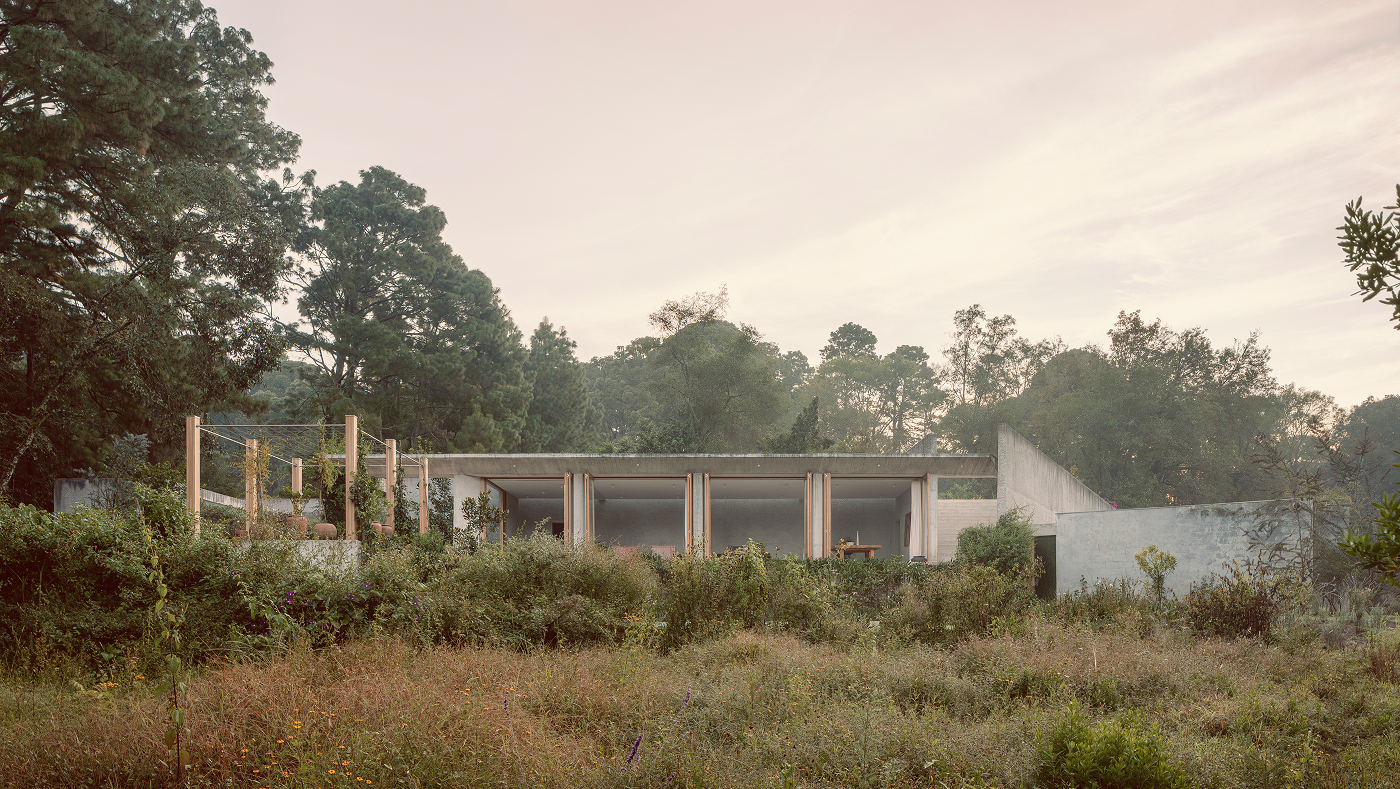
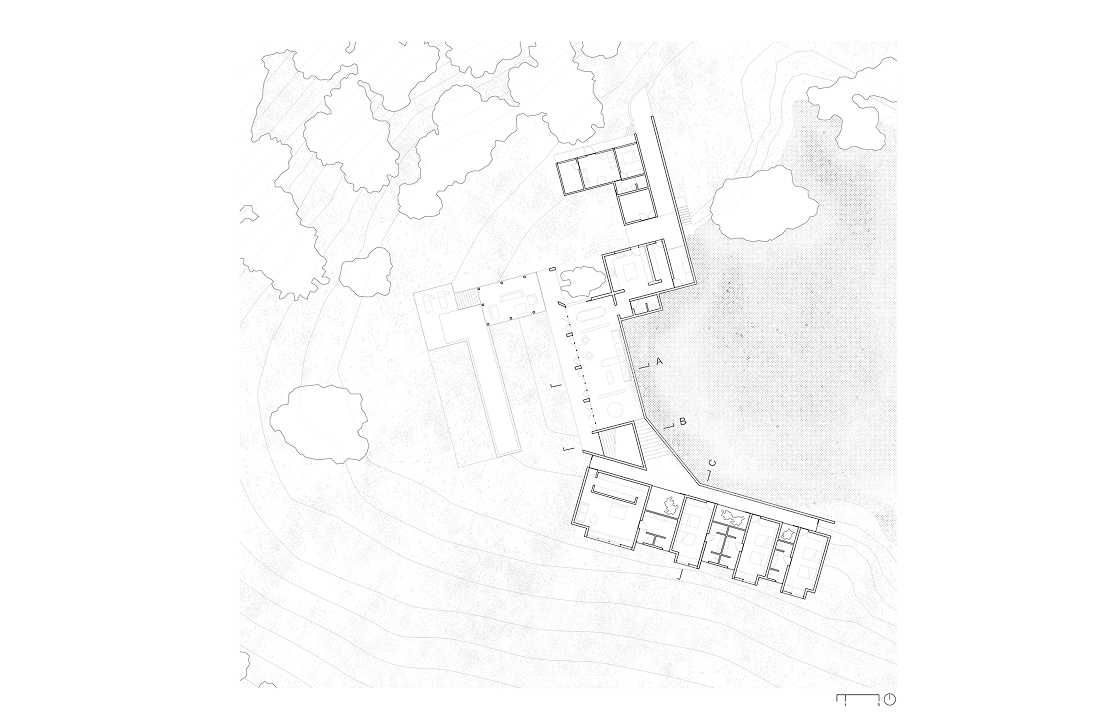
You arrive by going down a hill between two rivers. Three walls cut across it; one greets you. Two more conceal the layout: one houses the living room, dining room, kitchen, and social spaces; the other, further down, contains the bedrooms and patios, and through the windows, the forest seems to loom over you.

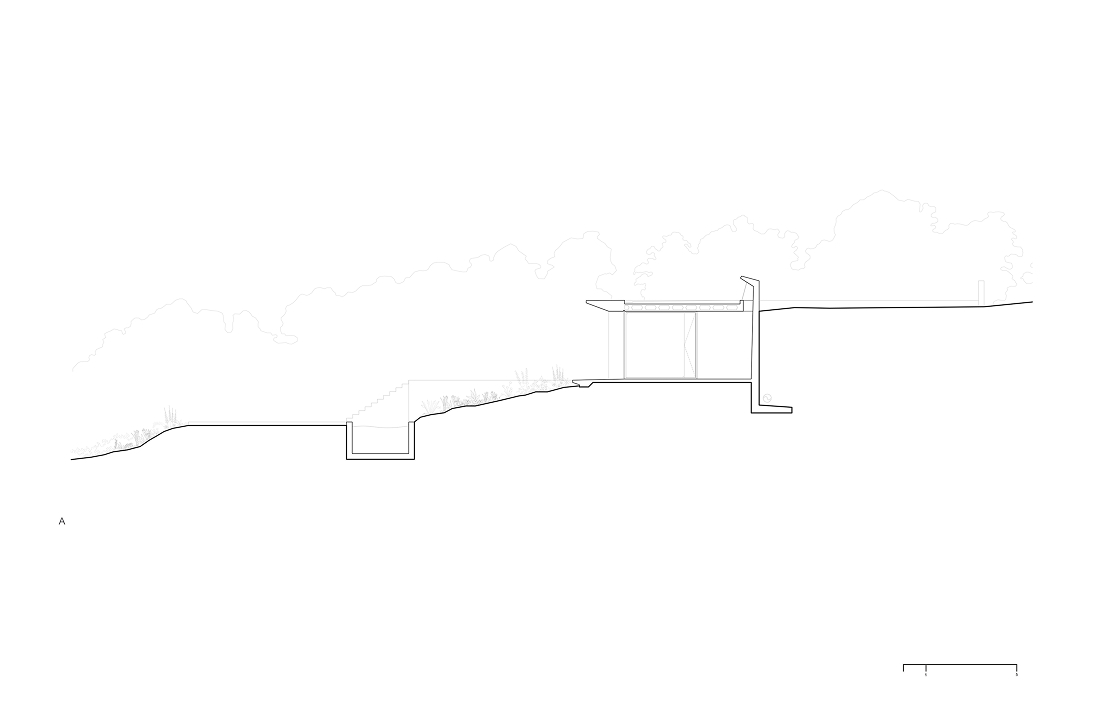
The house is situated in a clearing on a wooded hill. The public bar is positioned perpendicular to the ridge; a five-meter-high retaining wall cuts across the terrain, its presence hinted at from above by a half-wall. The lounge opens to the west, with folding red cedar windows left open all day. The lap pool is further down the hill, hidden behind bushes. The kitchen is tucked underground.

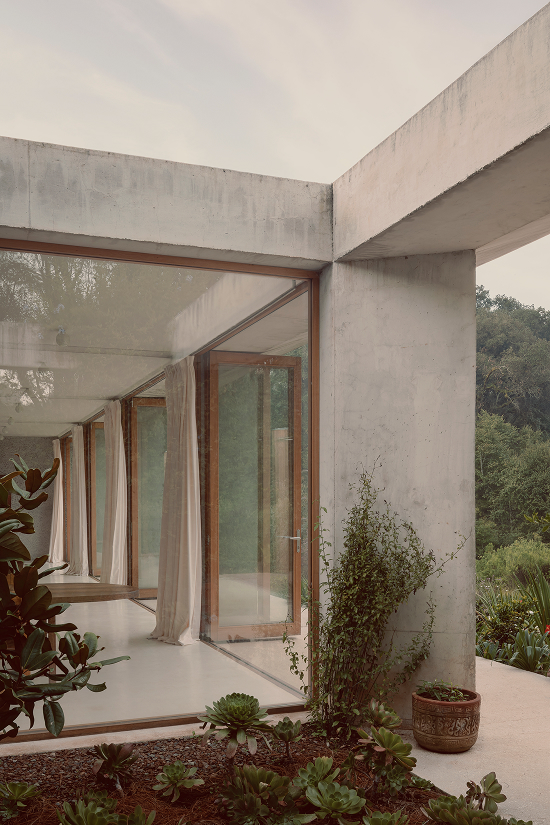
The private bar is two meters lower on the south slope. Its retaining wall extends two meters further. Seen from above, the half-wall remains. The rooms face south and are separated from the hill by a passageway illuminated by small landscaped patios. The rooms are made of concrete blocks with a very thin plaster finish; when the air is humid, the joints are visible.


The two bars are connected by a trapezoidal stairwell; their geometry allows for the house's layout. One above the other; one is a cave, the other open-air.


The large retaining walls act as thermal regulators for the house. When the mountain sun sets and the cold night arrives, the concrete keeps the house warm without a chimney or heating. The house receives its water from a nearby spring and is off-grid, powered by solar panels and a battery.



Superficie 380 m²
Año 2024
Ubicación Acatitlán, Valle de Bravo, México
Fotografía César Béjar
You may also like
Biblioteca Rahmah
Ubicada en la Escuela Primaria Rahmaniyeh, en el Distrito Seis de Ciudad del Cabo, es una nueva y vi ...
Centro Arqueológico Augusta Raurica
En Augst, Suiza, Karamuk Kuo diseña la primera sede propia del Centro Arqueológico Augusta Raurica ...
Kössen Educational Center
En Kössen, Austria, Pedevilla Architects diseña un centro educativo que reúne escuela primaria, j ...