Pabellón en El Durazno
Pabellón en El Durazno
Nicolás Oks designed a pavilion that establishes a dialogue between the stone wall of the site and the introduced structure, where ruin and artifact become inseparable.
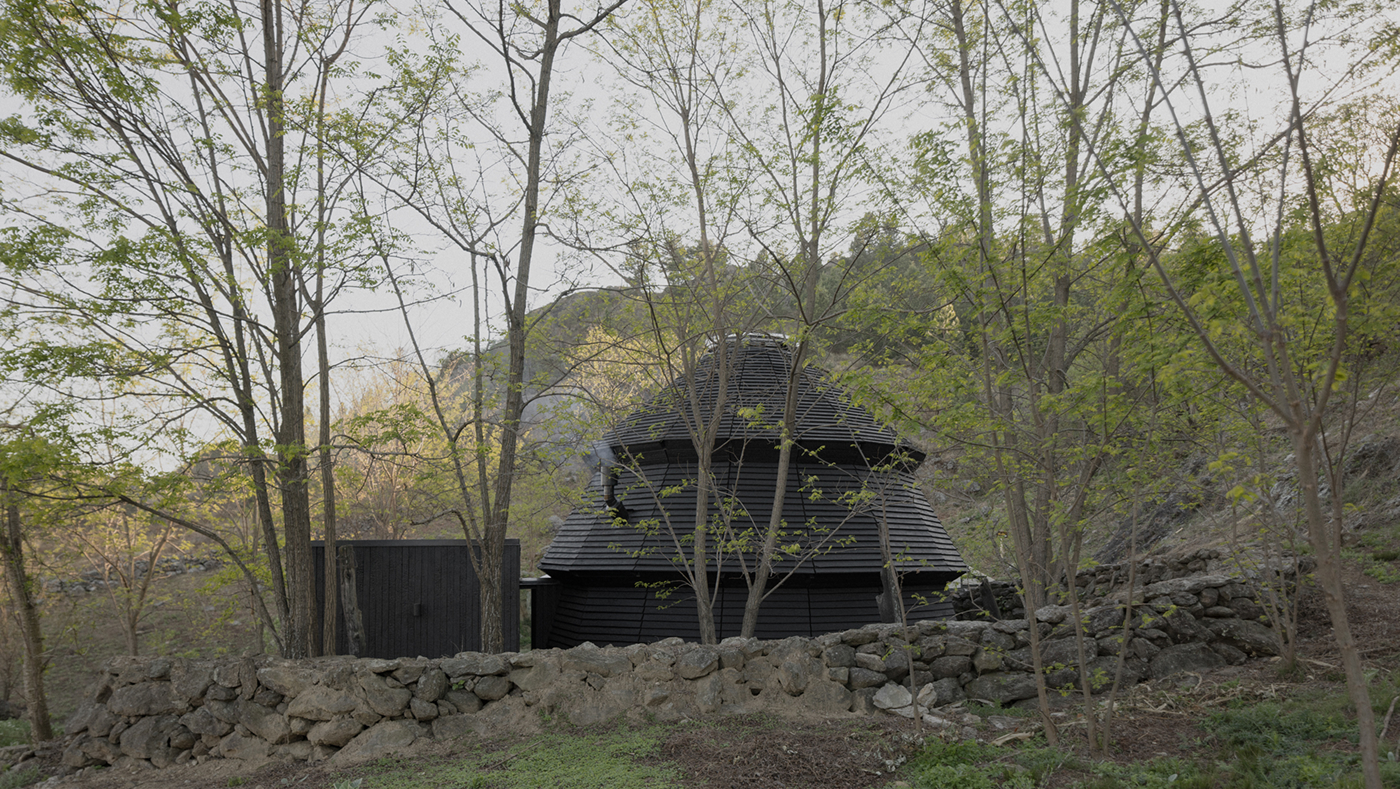
Located on the mountainside, just a few meters from the El Durazno River, the pavilion rises. It stands amidst Jesuit stone walls, surrounded by native vegetation of molle and espinillo trees. Looking north, one can see the Sierras Grandes mountain range, where Cerro Champaquí comes into view.
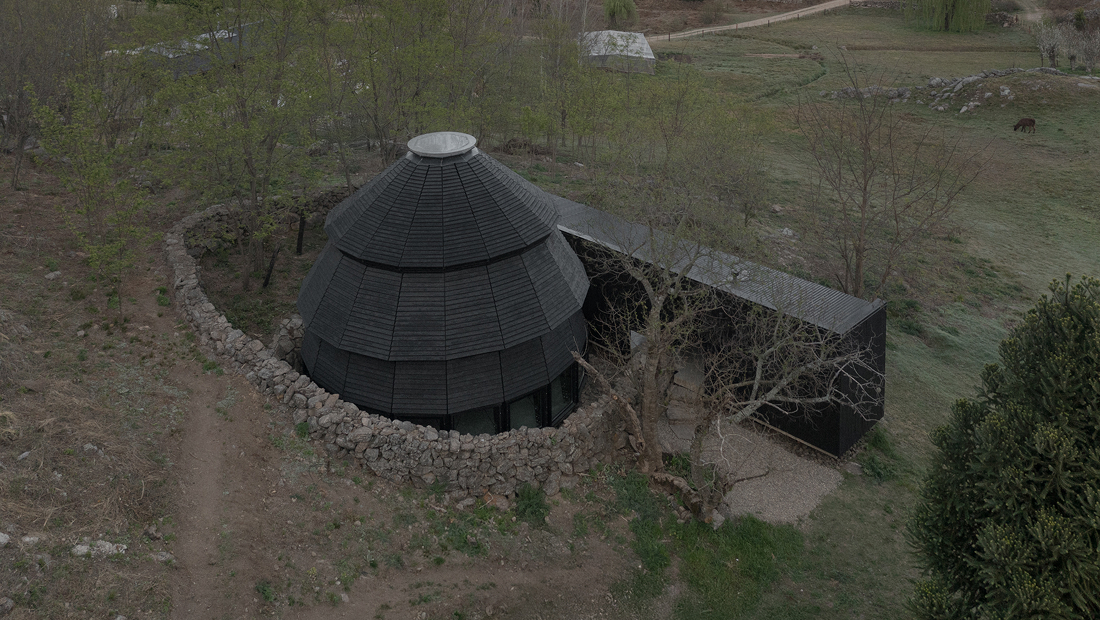
The project proposes to calibrate the space between the existing and the new, creating a dialogue between the original stone wall and the introduced structure. Within this void resides a dialectical tension, an interstice where ruin and artifact become inseparable, compelling the addition to acknowledge the site's memory. Architecture ceases to be a sum of parts and becomes a system of relationships, manifesting itself as a habitable sculpture.
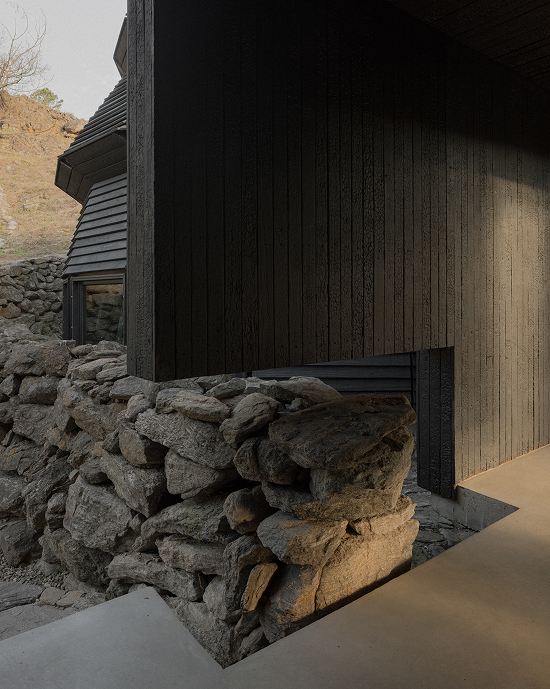
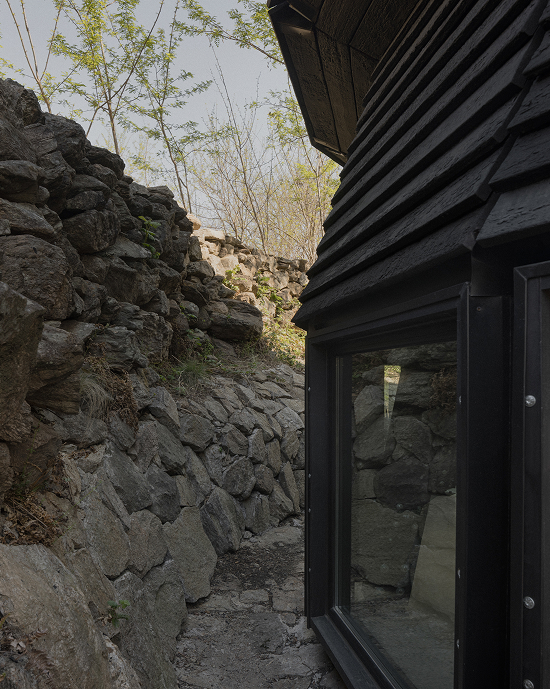
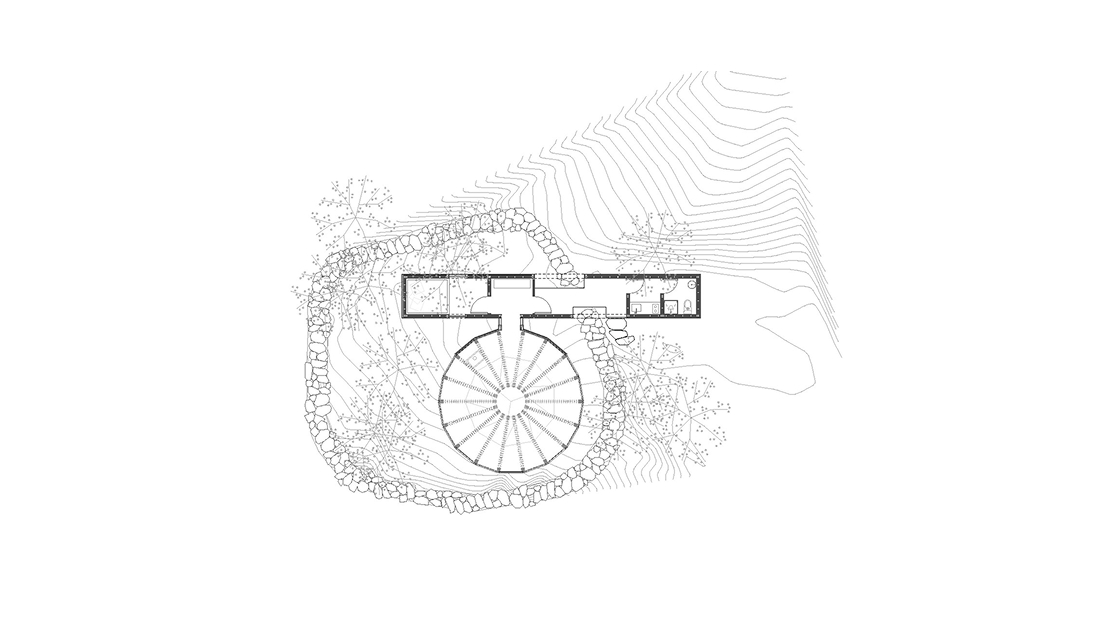
The intervention is consolidated into two parts. A prism that resolves the housing program. This functions as a semi-covered access area, where a concrete slab emerging from the ground narrows to pass through the original entrance of the corral, causing friction with the irregular stone of the dry-stone wall.
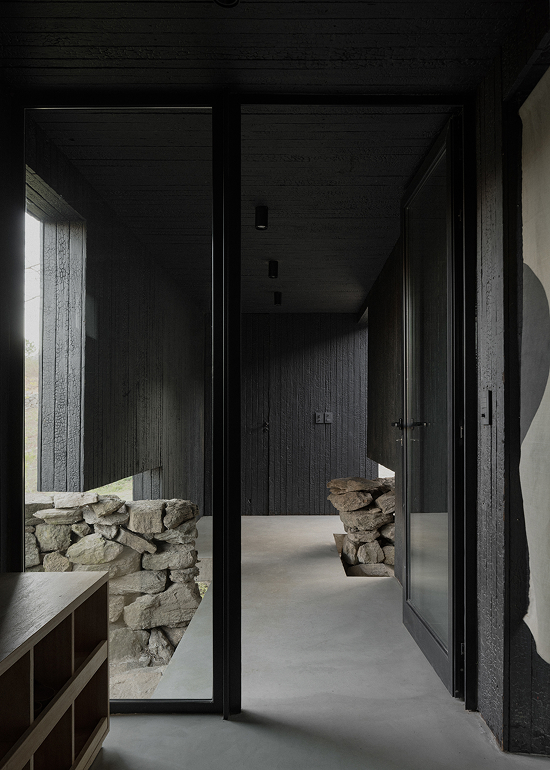
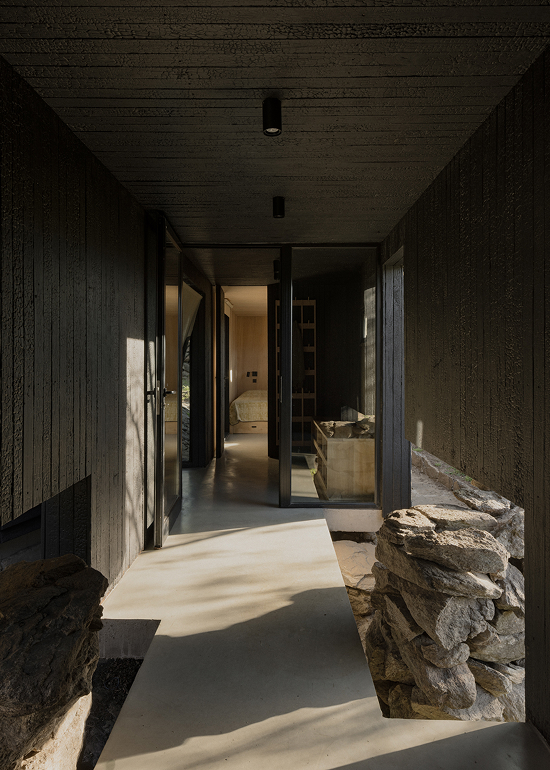
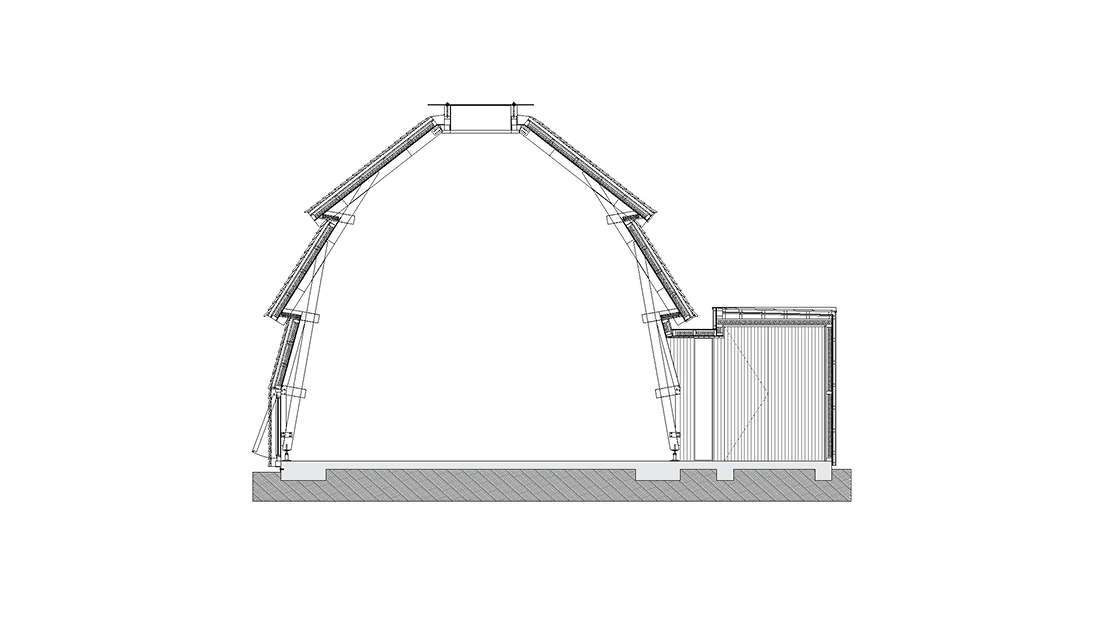
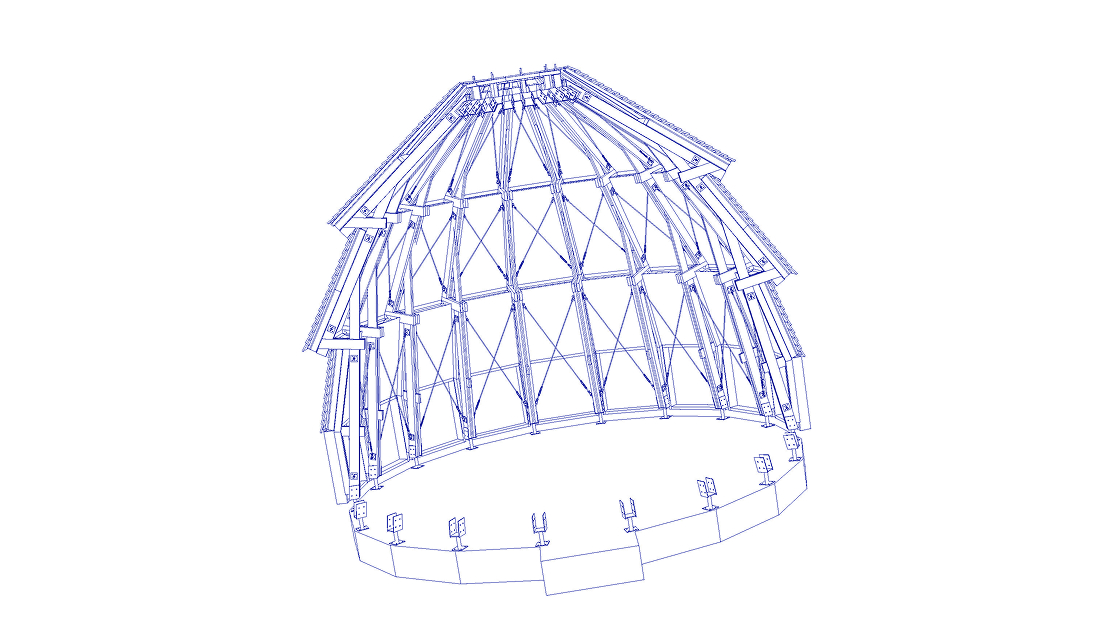
Visitors then pass through a connecting passageway between the two sections, finally reaching the central pavilion. This rises as a three-tiered octadecagon, culminating in a central skylight that captures zenithal light. In its lower tier, the glazed enclosure blurs the boundary, shifting the visual limit of the space toward the rough texture of the dry-stone wall. This eighteen-sided volume is configured through the rhythmic repetition of its own structure.
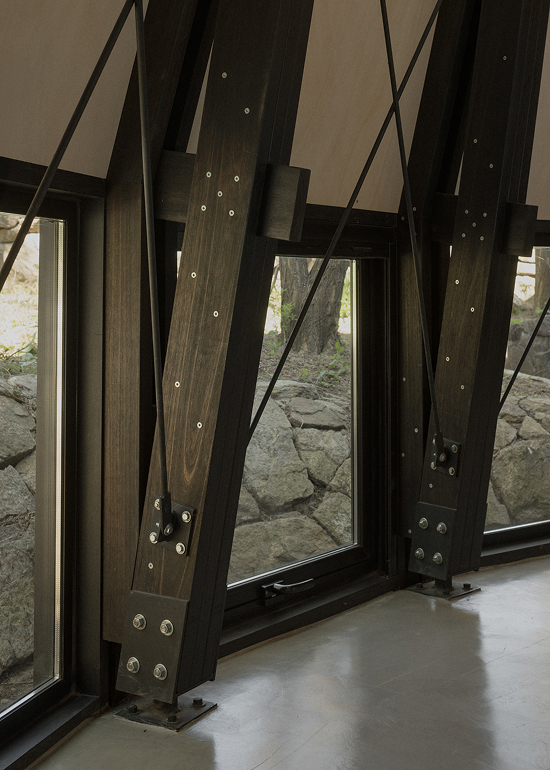
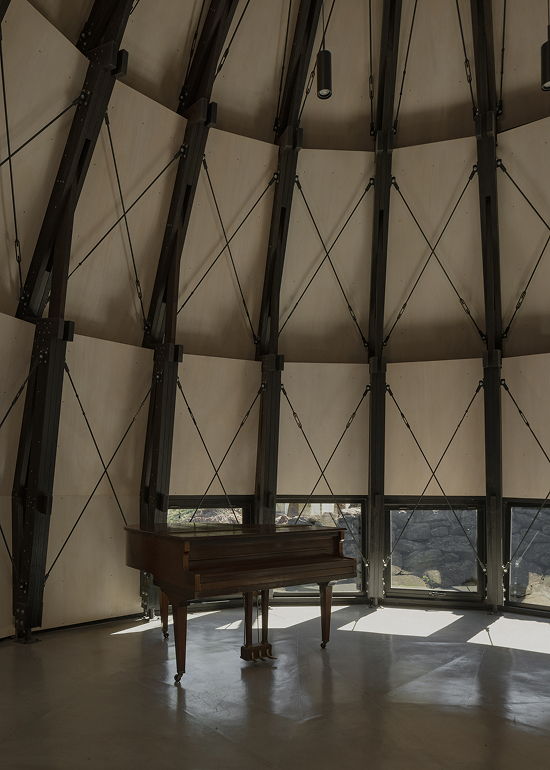
This dark, rough exterior—treated with the Shou Sugi Ban technique—reveals a light wood interior. A serene refuge that allows one to rest their gaze from the immensity of the mountain landscape. This space fosters an atmosphere of contemplation, conducive to developing practices of bodily and sound experimentation.
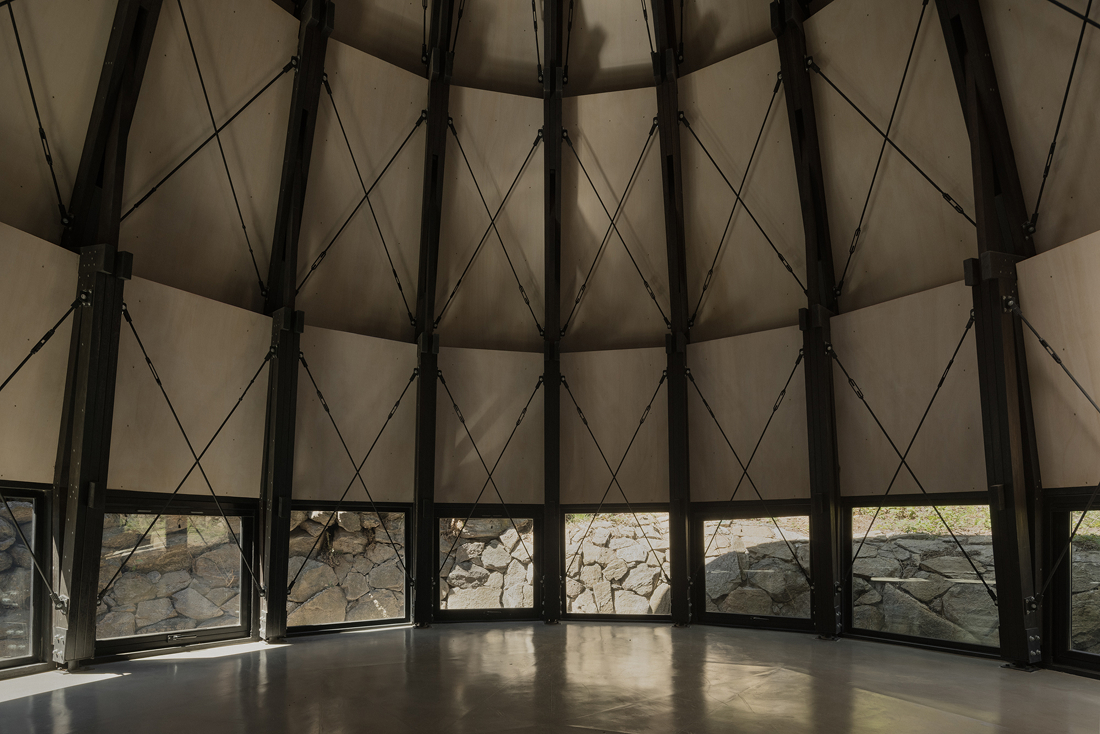
The result is an artifact that seems to have always been there or to have landed by chance; an object that, like the stones that contain it, retains the strangeness of that which does not quite explain its own origin.
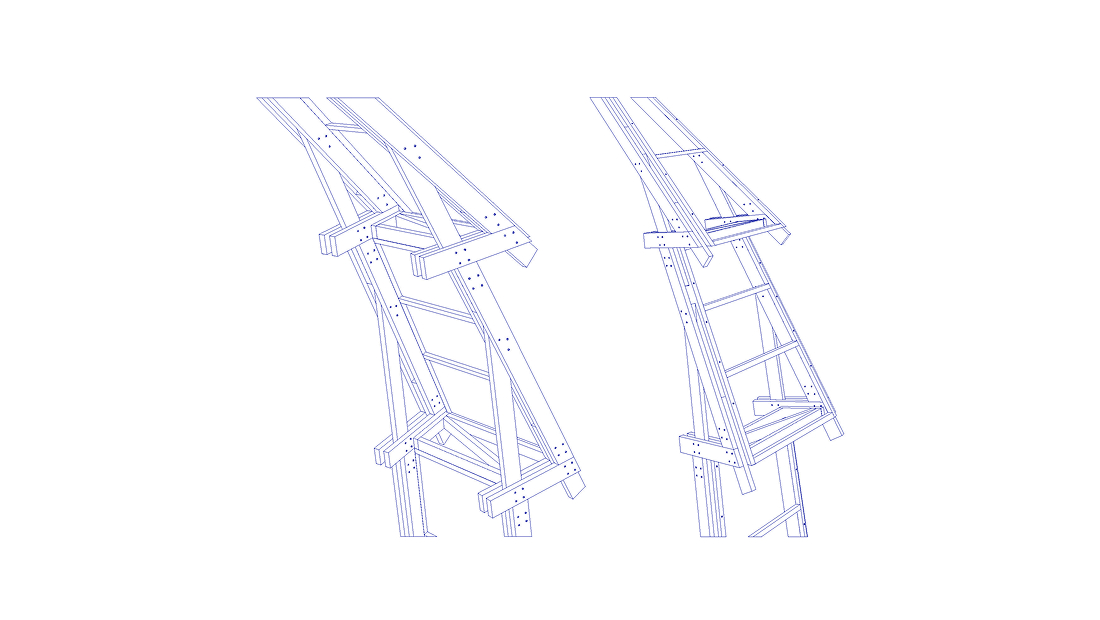
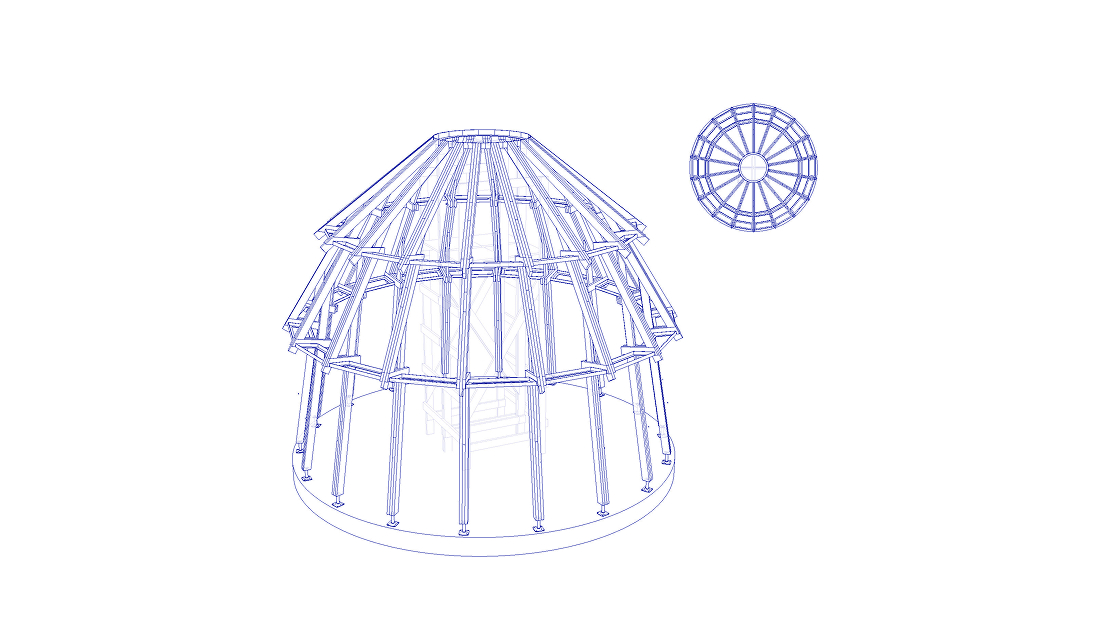
Equipo Azul Gawianski, Manuela Ihan
Superficie 70 m²
Ubicación Yacanto, Córdoba, Argentina
Año 2023-2024
Ente gestor Ente di gestione per i parchi e la biodiversità – Delta del Po
Asesores Leandro Griguol, Bruno Reynoso (ingeniería); Santiago Conte Mac Donell (desarrollo constructivo); Sur del Cruz, Dolores Mallea, Agustín Terrizzano, Natalia Marino, Junior Ratto, Juan Pedro Maffeo (desarrollo y producción de estructura de madera); Eric Dans, Pablo Hernandez, Leandro Cuevas,
Fotografía Federico Cairoli
You may also like
Biblioteca Rahmah
Ubicada en la Escuela Primaria Rahmaniyeh, en el Distrito Seis de Ciudad del Cabo, es una nueva y vi ...
Centro Arqueológico Augusta Raurica
En Augst, Suiza, Karamuk Kuo diseña la primera sede propia del Centro Arqueológico Augusta Raurica ...
Kössen Educational Center
En Kössen, Austria, Pedevilla Architects diseña un centro educativo que reúne escuela primaria, j ...